
Manufactured in India · Exported to KENYA
Borehole Drilling & Groundwater Solutions in Kenya
Groundwater development begins with understanding the relationship between geology, drilling depth, borehole diameter, access conditions and the intended water application. The drilling system must therefore be selected around the site rather than treated as a one-machine solution. SynergyRigs Kenya provides drilling-rig configurations and supporting solutions for contractors, drilling companies, agricultural developments, commercial projects and other groundwater applications. Our approach combines suitable drilling methods, machine configuration and supporting tooling to address different formation and operating conditions across Kenya.
Who We Are
Engineering Capability for Groundwater Development
Effective drilling starts with the right combination of machine capability, drilling method and site-specific considerations. Factors such as formation characteristics, target depth, borehole diameter and terrain influence the configuration required for productive field operations. Synergy Rigs Kenya brings together drilling-rig platforms, drilling methods and compatible tooling to support professional drilling contractors and groundwater development projects. The focus is on practical machine configurations that can perform reliably across varied operating environments in Kenya.
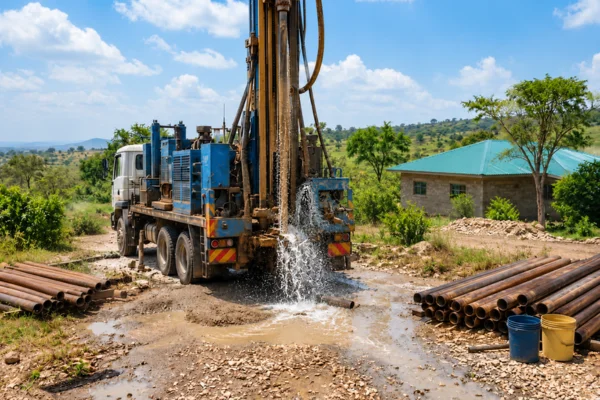
Drilling Technology Built Around Field Performance
Different formations respond differently to drilling action, making the choice of drilling technology an important part of borehole construction. Rotary and down-the-hole methods use different mechanisms to penetrate and remove formation material
Rotary Drilling
Rotary configurations for soil, softer formations and selected mixed-ground applications where continuous rotary cutting is appropriate.
DTH Drilling
Down-the-hole drilling configurations for hard-rock and competent formations where pneumatic hammering provides effective rock penetration.
Mobile Rig Platforms
Truck-, tractor- and crawler-mounted configurations allow machine selection according to transportation, terrain and site accessibility.
How Drilling Conditions Influence Rig Selection
Drilling Productivity
Contractors undertaking multiple boreholes may require a different machine configuration from a single-site groundwater project.
Target Depth
Expected drilling depth influences mast configuration, pull-up capacity, drill-pipe arrangement and overall rig selection.
Geological Formation
Soil, clay, sand, weathered rock, fractured rock and competent hard-rock formations require different drilling approaches.
Supporting Systems
Air compressors, DTH hammers, drill pipes, bits and other tooling must be matched to the selected drilling configuration.
Bore Diameter
The required finished borehole diameter affects tooling, drilling method, casing arrangement and machine capability.
Site Accessibility
Road conditions, working space, terrain and transport requirements influence the appropriate mounting platform.
Applications of Borehole Drilling in Kenya
Only now talk about applications.
01. Institutional Projects
Schools, healthcare facilities, campuses and community infrastructure requiring dependable groundwater access.
02. Industrial Applications
Groundwater development associated with industrial facilities and selected utility requirements.
03. Commercial Developments
Water-well applications for hotels, offices, commercial properties and large developments.
04. Residential & Housing
Groundwater development for private properties, housing developments and residential communities.
05. Construction & Infrastructure
Drilling requirements associated with construction sites and infrastructure development.
06. Agriculture & Irrigation
Borehole drilling for farms, irrigation schemes, horticulture and livestock operations.
Why Synergy Rigs Kenya
Kenya-Focused Market Understanding
Solutions are presented around the terrain, accessibility and groundwater-development needs encountered in Kenya.
Multiple Rig Configurations
Truck, tractor and crawler platforms provide flexibility for different access and operating environments.
Product-Focused Approach
Customers can evaluate individual drilling rigs, technical specifications and supporting components.
Scalable Drilling Solutions
Configurations can be considered for individual boreholes as well as contractor-led drilling operations.
Application-Led Engineering
Machine selection is connected to actual drilling conditions rather than a one-size-fits-all approach.
DTH & Rotary Capability
Different drilling approaches can be considered according to geological conditions.
Built for Kenya's Diverse Geological Environment
Kenya presents diverse geological environments, from unconsolidated soils and sedimentary formations to weathered and competent rock. Drilling performance therefore depends on matching the rig, drilling method and tooling to the formation encountered at site.
Frequently Asked Questions
1. What factors determine the right borehole drilling rig for a project in Kenya?
Rig selection depends on drilling depth, borehole diameter, geological formation, site accessibility, drilling volume and required drilling method. The mounting platform should also suit the operating environment.
2. How does geological formation affect drilling rig selection?
Ground conditions influence the drilling method, tooling and rig configuration. Soft formations may suit rotary drilling, while fractured or hard rock can require DTH drilling.
3. What drilling depth can a borehole drilling rig achieve?
Drilling depth varies by rig model and configuration. Mast arrangement, pull-up capacity, drill-pipe size, formation hardness and borehole diameter all influence depth capability.
4. How is borehole diameter considered when selecting drilling equipment?
Borehole diameter affects the required bit, hammer, drill pipe, casing and machine capability. Rig selection should therefore consider both target depth and borehole dimensions.
5. When is a truck-mounted, tractor-mounted or crawler rig more suitable?
The mounting platform depends on transportation, terrain and site access. Truck-mounted rigs offer road mobility, tractor-mounted rigs suit many rural sites, while crawlers provide greater flexibility on difficult terrain.
6. What supporting equipment is required for DTH borehole drilling?
A DTH setup typically includes a hammer, bit, drill pipes and compressed-air system. Compressor capacity should be matched to the selected hammer and d
7. Can one drilling rig handle different geological formations?
Some rigs support different drilling methods and tooling arrangements, allowing greater flexibility across changing formations. The practical range depends on the specific configuration.
8. What information should I provide when requesting a drilling rig?
Key details include target depth, bore diameter, expected formation, site accessibility, intended application and drilling volume. These parameters help determine a suitable rig configuration.
9. Are borehole drilling rigs suitable for agricultural and irrigation projects?
Yes. Borehole rigs can support groundwater development for farms, irrigation schemes and livestock operations. Selection depends on depth, formation, diameter and site accessibility.
10.What should contractors consider when selecting a rig for multiple boreholes?
Contractors should consider mobility, productivity, setup time, depth capability, tooling compatibility and compressor requirements. These factors become important when moving between multiple drilling sites.
11. Can drilling tools and components be selected together with the rig?
Yes. Hammers, bits, drill pipes and compressors should be matched with the selected rig and drilling method to create a compatible drilling configuration.
12. Does site accessibility influence borehole drilling productivity?
Yes. Restricted roads, uneven terrain and limited working space can affect mobilisation, setup and drilling operations. The right mounting platform can help address these site constraints.